

Table of Contents
- Why You Might Need a Dreame Alternative
- Best Robot Mop-Vac Combos on the Market
- Safe Cleaning Solutions for Robot Vacuums
- How to Buy Portable Vacuum for Car Detailing
- Chemical Safety and pH Balance in Cleaning Solutions
- Dilution Ratios and Step-by-Step Maintenance
- Long-Term Hardware Impact and Warranty Protection
- Conclusion
- Frequently Asked Questions
Last Updated: September 1, 2026
Why You Might Need a Dreame Alternative
When you're shopping for portable cleaning alternatives, you're likely weighing options that promise convenience without sacrificing power. Dreame has built a reputation in the portable cleaning space, but it's far from your only choice. Whether you're looking for better value, different features, or equipment that handles specific tasks more effectively, exploring Dreame alternatives for portable cleaning makes sense before committing your budget.
The real question isn't whether alternatives exist, they do, in abundance. The question is which one actually matches your specific use case. Some alternatives excel at robot mop-vac combos. Others shine when it comes to safe cleaning solutions or long-term hardware durability. At MyStuff, we offer high-quality, innovative gadgets designed to enhance your everyday living and workspace efficiency, including portable cleaning appliances.
Most buyers focus on upfront cost or brand recognition. That's a mistake. The true cost emerges over time through maintenance, replacement parts, and whether the machine actually handles your floor types without damaging them. A cheaper unit that corrodes your pump after six months isn't a bargain, it's an expensive lesson.
Best Robot Mop-Vac Combos on the Market
A robot mop-vac combo is a machine that vacuums and mops simultaneously, eliminating the need for separate devices. The best combos balance suction power, water tank capacity, and navigation accuracy without leaving residue on your floors.
The market has matured significantly. Modern mop-vac combos now feature self-cleaning cycles that rinse the mop pads automatically, reducing the manual work that plagued earlier generations. Suction power matters here, weak suction means the unit won't pick up dust before mopping, leaving streaks and requiring you to vacuum first anyway.
Key considerations when evaluating robot mop-vac combos:
- Suction power and pressure metrics: Look for units rated at 2,000+ Pa of suction. Anything below 1,500 Pa struggles with pet hair and debris on hard floors.
- Self-cleaning cycles: Machines that heat and wash their mop pads automatically reduce odor and bacterial growth between cleaning sessions.
- Water tank capacity: Larger tanks mean longer cleaning runs. Most homes benefit from at least 200ml tanks to avoid mid-session refills.
- Floor surface compatibility: Confirm the unit handles your specific flooring, hardwood, tile, laminate, or carpet. Some combos damage certain materials if the water settings aren't adjustable.
- Navigation precision: LIDAR-based mapping outperforms camera-only systems, especially in low-light conditions like bedrooms and hallways.
The cordless vacuum segment has evolved too. Portable upholstery cleaners now handle spot treatment on furniture and car interiors, which full-sized robot combos cannot do. If your cleaning needs span multiple surfaces beyond floors, a cordless vacuum paired with targeted spot-cleaning tools often outperforms a single combo unit.
Safe Cleaning Solutions for Robot Vacuums
Using the wrong cleaning solution can void your warranty, corrode internal pumps, and damage floor finishes. Safe cleaning solutions for robot vacuums share specific characteristics: they're pH neutral, residue-free, and formulated to work with the machine's internal pump without causing buildup.
pH neutral solutions matter more than most users realize. Solutions with high acidity or alkalinity interact with metal components inside the pump and tubing, causing corrosion over time. A pH-neutral cleaner, typically in the 6.5 to 7.5 range, won't degrade these materials. Many commercial floor cleaners skew alkaline to cut through grease, making them unsuitable for robot vacuums that rely on gentle chemistry.
Residue-free formulations prevent the mineral and soap buildup that clogs nozzles and reduces water flow. Hard water in many regions compounds this problem. If your tap water is mineral-heavy, distilled water mixed with your cleaning solution reduces residue accumulation.
Common mistakes with cleaning solutions:
- Using bleach or vinegar-based solutions that damage internal seals and tubing
- Adding fabric softener or essential oils that leave residue and void warranties
- Diluting non-approved solutions hoping they'll work safely (they won't)
- Ignoring manufacturer dilution ratios, which are engineered for the pump's pressure tolerance
Generic alternatives to branded solutions can work if they meet these criteria. The brand name matters less than the chemistry. However, testing on a small area first is essential, not all generic solutions perform identically, even if they claim similar pH levels.
How to Buy Portable Vacuum for Car Detailing
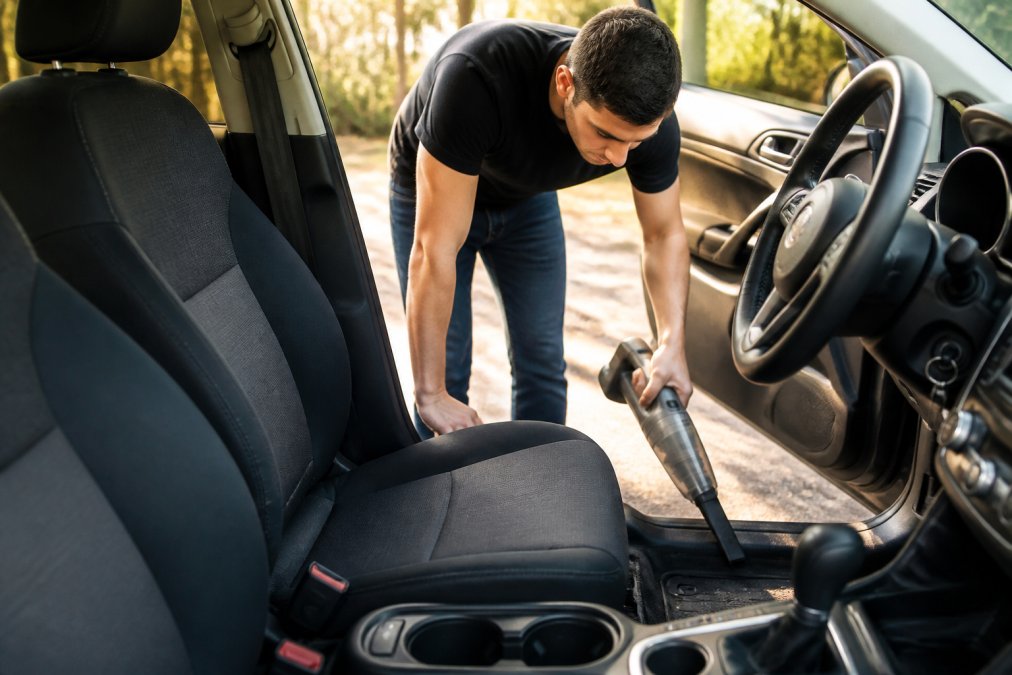
Buying a portable vacuum for car detailing requires different criteria than floor-based portable cleaning alternatives. Car interiors present unique challenges: confined spaces, upholstery attachment needs, and the requirement for cordless operation since you're working in and around a vehicle.
Start by assessing your actual cleaning frequency. If you detail your car weekly, invest in a unit with strong battery life and a removable upholstery attachment. If you detail quarterly, a smaller cordless model with moderate runtime suffices. Battery runtime matters enormously, most car interiors take 20-30 minutes to fully clean, so a unit with 25+ minutes of runtime prevents mid-job battery swaps.
Suction power for car detailing typically needs to be in the 80-120 kPa range. This handles pet hair, crumbs, and dust without being so aggressive that it damages delicate car fabrics. Portable upholstery cleaner performance depends on the attachment design, wider heads cover more area but fit poorly in tight spaces, while narrower attachments reach between seats but require more passes.
Weight becomes critical for car detailing. A 5-pound unit feels manageable for 20 minutes. A 10-pound unit becomes exhausting when you're reaching into door panels and under seats. Cordless models eliminate the cord-management hassle, but battery weight compounds the overall burden.
Consider these specifications:
- Battery runtime: minimum 25 minutes for full-car cleaning
- Weight: under 6 pounds for comfortable overhead work
- Upholstery attachment: included and designed for automotive fabrics
- Filter maintenance: easy-access, washable filters reduce replacement costs
- Suction power: 80-120 kPa for car interiors without material damage
MyStuff's TurboClean™ Mini Washer ($14.99) addresses a different but related need, ultrasonic cleaning for delicate car interior fabrics like seat covers and mats. While not a vacuum, it complements portable cleaning by handling items that need washing rather than vacuuming.

Chemical Safety and pH Balance in Cleaning Solutions
Chemical safety in cleaning solutions extends beyond pH to the full composition of what you're putting into your machine. Understanding pH balance prevents hardware damage and ensures your warranty remains valid.
The pH scale runs from 0 (highly acidic) to 14 (highly alkaline), with 7 being neutral. Most floor cleaners cluster at pH 10-12 (alkaline) because alkalinity cuts through grease and oils. Robot vacuums, however, aren't designed for alkaline solutions. Their internal pumps, seals, and tubing are optimized for neutral to slightly acidic conditions.
Why pH matters for hardware: Alkaline solutions soften rubber seals and accelerate corrosion of metal components. Acidic solutions can etch protective coatings inside the pump. Neutral solutions preserve both. Over 6-12 months of regular use, the wrong pH will noticeably degrade pump performance and eventually cause leaks.
Testing pH is straightforward with inexpensive pH strips available at hardware stores. Most safe cleaning solutions for robot vacuums display their pH on the label. If it's not listed, contact the manufacturer before using it, unlabeled pH often indicates the product wasn't tested for robot vacuum compatibility.
Proprietary versus generic solutions: Branded solutions cost more but guarantee pH testing and warranty compatibility. Generic alternatives work if they're pH neutral and residue-free, but you're responsible for verifying those properties. Many generic "eco-friendly" cleaners skew alkaline, making them unsuitable despite their marketing.
Dilution Ratios and Step-by-Step Maintenance
Dilution ratios aren't suggestions, they're engineered specifications. Ignoring them changes the solution's pH, viscosity, and cleaning power in ways that affect hardware performance.
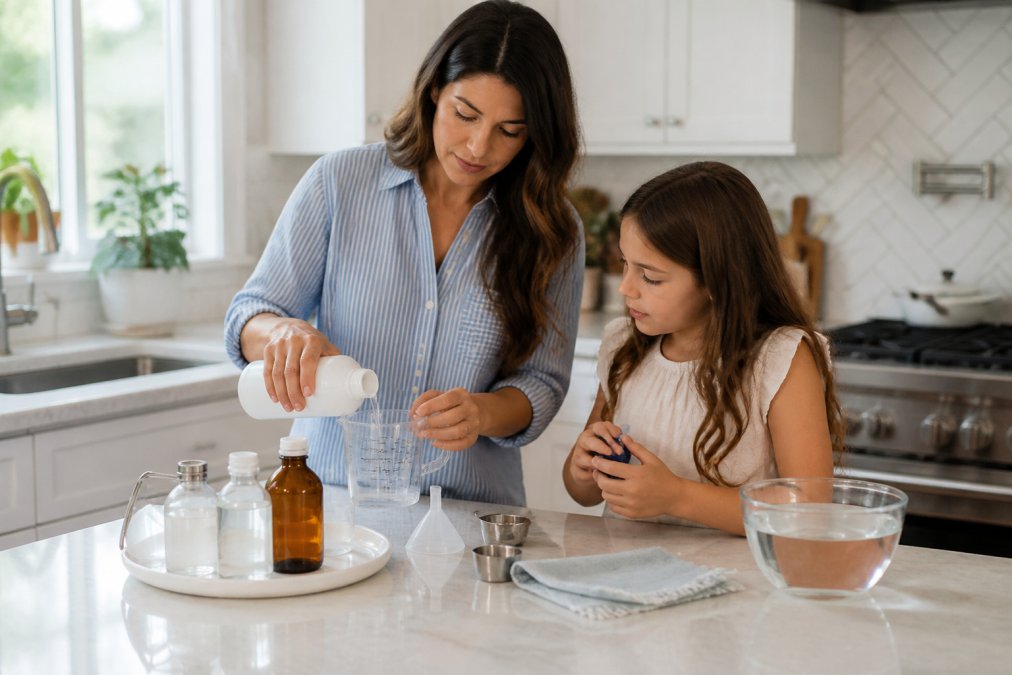
Most robot vacuum cleaning solutions use a 1:10 to 1:20 ratio (one part solution to ten or twenty parts water). This dilution maintains pH balance while providing cleaning power. Using a stronger ratio (more solution, less water) concentrates the chemistry, raising pH and leaving more residue. Using a weaker ratio reduces cleaning effectiveness and may require multiple passes.
Step-by-step dilution process:
- Measure your water volume first. If your robot vacuum's tank holds 500ml, use a measuring cup to pour exactly 500ml of distilled water into the tank.
- Calculate the solution amount. For a 1:10 ratio, add 50ml of concentrated solution. For 1:20, add 25ml. Use a measuring spoon or syringe for accuracy.
- Mix thoroughly. Stir or shake the tank for 30 seconds to ensure even distribution. Uneven mixing leaves some areas too concentrated.
- Test on a hidden floor area. Run the mop function on a small section of your least-visible floor to confirm the mixture doesn't leave streaks or residue.
- Fill the tank completely if needed. Top off with distilled water to reach the maximum fill line.
Maintenance beyond dilution:
- Filter maintenance: Rinse filters weekly under cool running water. Replace every 3-6 months depending on dust levels in your home.
- Self-cleaning cycles: Run the machine's built-in self-cleaning cycle after every use. This heats and rinses the mop pads, preventing bacterial growth and odor.
- Sensor calibration: Many robots have floor-detection sensors that need occasional cleaning. Wipe sensors with a soft, dry cloth monthly to maintain accuracy.
- Tubing inspection: Check internal tubing quarterly for mineral deposits or discoloration. Deposits indicate hard water buildup; run a diluted white vinegar cycle (1 part vinegar to 10 parts water) once monthly if deposits appear.
Long-Term Hardware Impact and Warranty Protection
The cleaning solution you choose today determines whether your portable cleaning equipment functions reliably in 18 months. Long-term hardware impact from improper solutions manifests as reduced suction, leaking tanks, or failed pumps, all expensive repairs that warranties often don't cover.
Warranty protection depends on documented proper use. Most manufacturers specify approved cleaning solutions in their warranty terms. Using non-approved solutions, even if they seem chemically similar, voids coverage. This isn't arbitrary, it's how manufacturers protect themselves from liability when their equipment fails due to user error.
Corrosion patterns differ by component. Pump failure from alkaline solutions typically takes 8-12 months of regular use. Seal degradation from acidic solutions happens faster, often within 3-4 months. Tubing corrosion is slower but insidious, you won't notice until water leaks onto your floors.
Warranty void scenarios:
- Using solutions not listed in the manufacturer's approved products guide
- Mixing approved and non-approved solutions in the same tank
- Using solutions with undisclosed pH or chemical composition
- Ignoring maintenance cycles that the warranty explicitly requires
- Failing to document maintenance (many warranties require proof of regular care)
Real-world example: A common mistake is using leftover floor cleaner from a mop bucket. Even if it worked fine on hardwood, it may have a pH of 11 or higher. One full tank cycle won't destroy the pump, but repeated use over months will. By the time the pump fails, you've lost warranty coverage and face a replacement cost of $200-400.
Portable upholstery cleaner performance also degrades with improper solutions. Residue buildup reduces suction and increases filter clogging, requiring more frequent filter replacements. Each replacement is an added expense that could have been avoided with proper solution selection.
The cost-benefit math is straightforward: approved solutions cost slightly more upfront but preserve warranty coverage and equipment lifespan. A $15 bottle of approved solution protects a $400 machine. Using a $5 generic alternative to save $10 risks losing the entire investment.
Conclusion
Choosing a Dreame alternative for portable cleaning means evaluating your specific needs, whether you prioritize robot mop-vac combos, safe cleaning solutions, or portable upholstery performance. The best option matches your floor types, cleaning frequency, and budget without compromising on chemical safety or long-term hardware durability.
MyStuff offers portable cleaning solutions engineered for durability and performance. Our TurboClean™ Mini Washer ($14.99) handles delicate fabrics with ultrasonic precision, while our product ecosystem supports multiple cleaning scenarios from car interiors to home floors. Shop Smart Essentials today and discover portable cleaning equipment built to last.
Frequently Asked Questions
Q: What can I use as an alternative to Dreame cleaning solution?
A: Generic pH-neutral cleaning solutions work well with most robot vacuums, provided they meet the manufacturer's dilution ratio and pH requirements. Look for solutions specifically labeled as safe for robotic floor care or dilute all-purpose cleaners to the recommended concentration. Always verify compatibility with your device's internal pump to avoid corrosion. Avoid solutions with heavy fragrances or residue-forming ingredients, as these can clog sensors and reduce suction power over time.
Q: Are non-branded cleaning solutions safe for robot mop-vac combos?
A: Non-branded solutions are safe if they meet three criteria: pH-neutral formulation, proper dilution ratio (typically 1:10 or 1:20), and no silicone or wax additives. Always test on a small floor area first. Using unapproved agents risks voiding your warranty and may cause tubing corrosion or sensor calibration issues. Check your device manual for approved ingredient lists before switching from the brand-specific option.
Q: How do I choose a portable vacuum for car detailing?
A: Prioritize cordless models with at least 15-20 minutes of runtime and suction power rated for upholstery attachment work. Look for units with a self-cleaning cycle to reduce maintenance and filter clogging. Verify the tubing material resists corrosion if you plan to use cleaning solutions. Consider weight and handle design for comfort during extended sessions, and check that the portable upholstery cleaner fits your vehicle's interior dimensions and tight spaces.
Q: What happens if I use incompatible cleaning solutions in my portable cleaner?
A: Incompatible solutions can cause tubing corrosion, damage the internal pump, disable sensor calibration, and void your warranty. Residue-forming or high-pH cleaners reduce suction power and create buildup inside filters. In worst-case scenarios, chemical reactions inside the tank may render the device unusable. Always follow the manufacturer's dilution ratio and ingredient restrictions to protect your investment and maintain long-term hardware performance.
This article was written using GrandRanker