

Table of Contents
- What to Look for Before You Buy a Portable Vacuum for Car
- Battery Life, Runtime, and Charging Options
- Best Handheld Vacuum for Pet Hair in Cars
- Car Vacuum Attachments for Tight Spaces
- How to Clean Car Interior with Handheld Vacuum
- Long-Term Durability, Maintenance, and Storage in Your Vehicle
- Portable Vacuum for Car: Quick Comparison by Use Case
- Conclusion
Last Updated: August 23, 2026
What to Look for Before You Buy a Portable Vacuum for Car
A portable vacuum for car use is a compact, handheld or cordless cleaning device designed to reach tight spaces, upholstery, and floor mats inside a vehicle. The right one handles pet hair, crumbs, and fine debris without requiring a full-size vacuum or detailing shop visit.
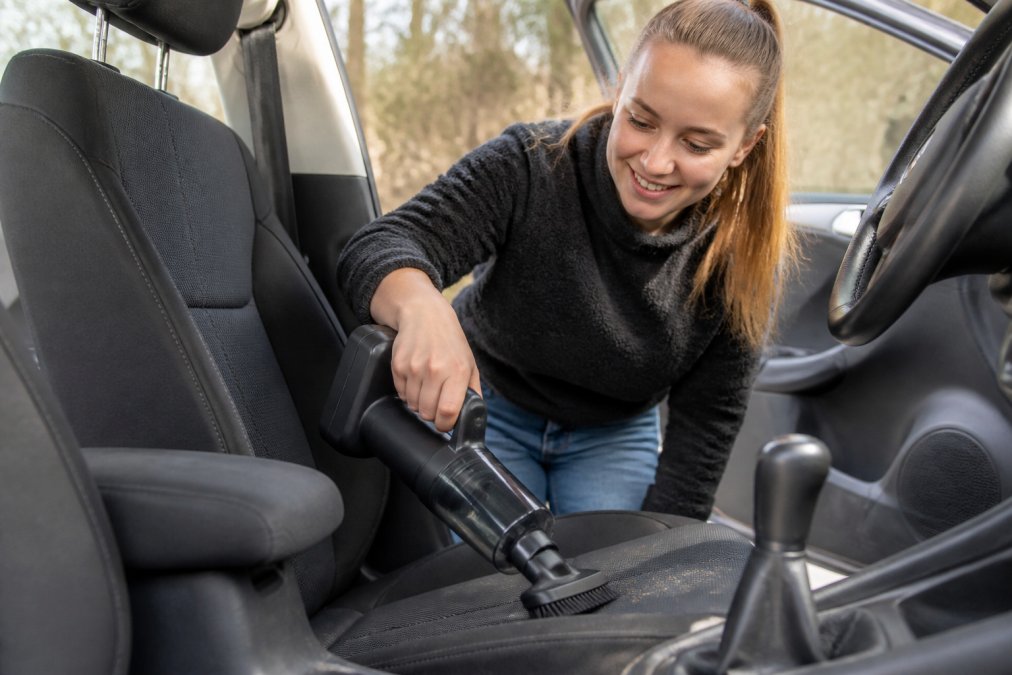
Suction Power and Motor Performance
Suction power separates a useful car vacuum from a glorified dust brush. For vehicle interiors, look for a high-power motor that generates strong airflow, measured in air watts or pascals of suction. Most lightweight handheld vacuums designed for automotive detailing fall into a range where higher suction ratings translate directly to better pickup of embedded pet hair and fine debris.
A common mistake is buying a mini vacuum based on price alone, then discovering it can't lift ground-in dirt from floor mats. Suction power matters more than almost any other specification when dealing with fabric seats or textured cargo liners.
Cordless vs. Corded: Which Works Better in a Vehicle?
Cordless vacuums win for maneuverability inside a car. A corded model tethered to a 12V adapter or extension cord limits your reach and creates a tripping hazard. Cordless, rechargeable designs let you move freely from the front cabin to the trunk without repositioning a power source.
Corded 12V adapter models have one advantage: they don't run out of battery mid-session. For longer cleaning jobs or if you frequently forget to recharge, a corded option provides consistent runtime. For most users, a cordless lithium-ion battery model is the practical choice, just confirm the runtime is sufficient for your vehicle size.
Dust Bin Capacity and Filter Type
Dust bin capacity determines how often you empty the vacuum during a session. A compact design often means a smaller bin, which is fine for quick touch-ups but frustrating during a full interior clean. For a family vehicle or a car used to transport pets, prioritize a larger bin volume.
Filter type matters for air quality. A HEPA filter traps fine particulate matter, including allergens and pet dander, rather than recirculating it. According to EPA guidance on indoor air quality and particulate filtration, HEPA filters capture particles as small as 0.3 microns with high efficiency. A washable filter extends the vacuum's useful life and reduces ongoing costs.
Battery Life, Runtime, and Charging Options
Runtime is the spec most buyers regret ignoring. A cordless handheld vacuum with a lithium-ion battery typically offers 15 to 30 minutes of continuous use depending on the power mode. A compact sedan is manageable in 15 minutes; a minivan or full-size truck is not.
Charging time is equally important. Some models charge in under two hours; others require an overnight cycle. If you clean your car weekly, a fast-charging model keeps the vacuum ready without planning ahead.
A few things worth checking before you buy:
- Battery type: Lithium-ion holds charge longer than older nickel-cadmium designs
- Runtime at full suction: Some vacuums quote maximum runtime at the lowest power setting, which won't handle heavy debris
- Indicator lights: A battery level indicator prevents mid-session surprises
- Charging method: USB-C charging is increasingly common and more convenient than proprietary docks
Best Handheld Vacuum for Pet Hair in Cars
Pet hair removal is where most standard handheld vacuums fail. Pet hair weaves into upholstery fibers and resists normal suction. The best handheld vacuum for pet hair combines strong airflow with a motorized brush head or rubber nozzle that physically lifts embedded hair before suction pulls it into the bin.
Three factors separate a capable pet hair vacuum from a mediocre one:
- Motorized brush roll: Agitates fibers to loosen embedded hair rather than just skimming the surface
- Rubber upholstery brush: Creates static attraction that pulls pet hair into clumps for easier pickup
- HEPA filtration: Captures pet dander and allergens that become airborne during cleaning
A motorized or rubber attachment is non-negotiable for fabric seats. Runtime matters more here too, a model with at least 20 minutes of full-power runtime handles most vehicle interiors without requiring a recharge mid-session.
According to American Kennel Club guidance on pet hair management in vehicles, rubber grooming tools and lint rollers used in combination with vacuuming produce the most thorough results, which is consistent with the multi-tool approach top-rated handheld vacuums offer.
Car Vacuum Attachments for Tight Spaces
The vacuum motor is only half the equation. The attachments determine whether you can reach the places that collect the most debris: the gap between the seat and center console, under seat rails, around the gear shift, and in door pocket corners.
Crevice Tools, Upholstery Brushes, and Mini Nozzles
A crevice tool is a narrow, elongated nozzle designed to fit into tight spaces that a standard vacuum head can't access. For car interiors, it's essential for cleaning the seat-to-console gap, between seat cushions, and around the gear selector.
An upholstery brush uses soft bristles to loosen debris from fabric seats without scratching the surface. It's also safe for use on leather when used gently, though dedicated leather-safe attachments are preferable.
Mini nozzles and flexible hose extensions increase versatility. A flexible hose lets you direct suction into awkward angles without contorting the entire unit.
Here's a quick summary of which attachments suit which cleaning tasks:
| Attachment | Best For | Surface Compatibility |
|---|---|---|
| Crevice tool | Seat gaps, door pockets, console edges | All surfaces |
| Upholstery brush | Fabric seats, floor mats, headliner | Fabric, carpet |
| Motorized brush roll | Embedded pet hair, carpet fibers | Fabric, carpet |
| Rubber nozzle | Pet hair on smooth surfaces | Fabric, leather |
| Mini flat nozzle | Vents, dashboard crevices | Hard surfaces |
| Flexible extension hose | Under seats, trunk corners | All surfaces |
How to Clean Car Interior with Handheld Vacuum
Cleaning a car interior with a handheld vacuum is faster and more effective when you follow a consistent sequence.
Step-by-Step Deep Cleaning Routine
- Remove floor mats and shake them out first. Vacuuming mats in place just moves debris around. Take them out, shake off the bulk, then vacuum both sides before returning them.
- Start from the top down. Begin with the headliner and sun visors if dusty, then move to the seats, then the floor. Gravity works in your favor.
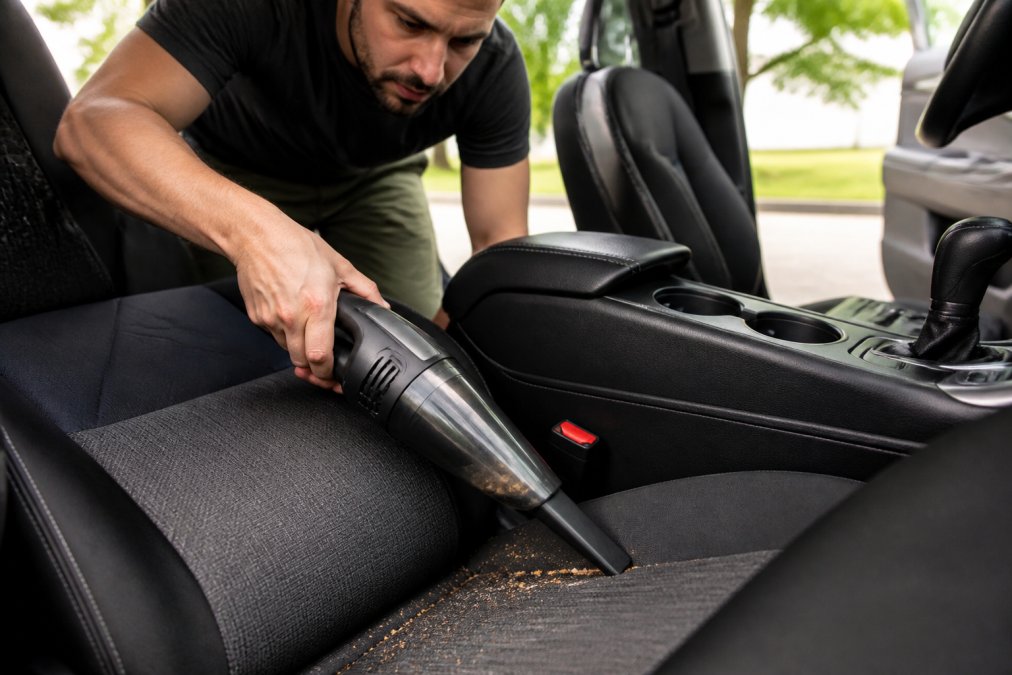
- Vacuum seat surfaces with the upholstery brush. Use overlapping strokes to lift embedded debris before switching to the crevice tool for seams and gaps.
- Use the crevice tool along all seat edges and the center console. This is where the most debris accumulates. Work slowly; rushing skips debris.
- Vacuum the floor carpets in sections. Work from the back seats forward so you're not kneeling on already-cleaned carpet.
- Finish with the trunk. Cargo liners trap a surprising amount of fine debris. A flat nozzle works well on hard plastic liners.
Interior Material Compatibility: Fabric, Leather, and Cargo Liners
Not every attachment is appropriate for every surface.
Fabric upholstery handles aggressive vacuuming well. Motorized brush rolls and firm upholstery brushes are safe and effective for removing embedded debris.
Leather and leatherette require a softer approach. Use a soft-bristle upholstery brush and avoid motorized brush rolls, which can scratch or scuff the surface. Suction alone, or with a rubber nozzle, is the safest method.
Hard plastic cargo liners work best with a flat nozzle or the vacuum's bare suction port. Brushes on hard plastic can scatter debris rather than capturing it.
Carpeted cargo areas behave like floor mats. A motorized brush or firm upholstery brush lifts embedded dirt effectively.
According to Automotive Care Association guidance on vehicle interior maintenance, using the correct tool for each surface type prevents premature wear and maintains interior appearance over time.
Long-Term Durability, Maintenance, and Storage in Your Vehicle
The real cost of a portable vacuum for car use isn't the purchase price, it's the ongoing cost of filters, repairs, and whether the unit survives being stored in a vehicle through temperature extremes.
Most handheld car vacuums are not designed for repair. When the motor fails, the unit is typically replaced. Durability comes down to build quality: the housing material, motor quality, and how well the dust bin seals. Units with all-plastic construction and thin walls tend to crack over time.
Filter Maintenance and Washable Filter Care
Filter maintenance is the most neglected aspect of portable vacuum ownership. A clogged filter reduces suction dramatically.
For washable filters:
- Remove the filter after every three to five uses, or whenever suction noticeably drops
- Tap it gently over a trash can to dislodge dry debris before washing
- Rinse under cold water until the water runs clear
- Allow to dry completely before reinstalling, typically 24 hours; installing a damp filter damages the motor
- Replace non-washable filters on the manufacturer's schedule, usually every one to three months with regular use
Compact Storage Solutions for Your Car
Storage is genuinely underrated as a buying criterion. A portable vacuum that lives in the trunk loose will eventually be damaged. A vacuum that's awkward to store gets left at home.
The best storage approaches include:
- Trunk organizer with a dedicated compartment sized to the vacuum's dimensions
- Behind-seat storage pouch for smaller handheld models
- Charging dock mounted in the garage so the vacuum stays charged between uses
- Mesh bag to keep the vacuum and all attachments together
A compact design with attachments that clip directly onto the vacuum body is far more practical for vehicle storage than a unit with loose accessories.
Portable Vacuum for Car: Quick Comparison by Use Case
Different buyers have different priorities. Here's a straightforward breakdown to help you decide which type of portable vacuum for car use fits your situation best.
| Use Case | Best Vacuum Type | Key Feature to Prioritize | Runtime Needed |
|---|---|---|---|
| Quick daily touch-ups | Ultra-compact cordless | Lightweight, fast charge | 10-15 min |
| Pet hair removal | Cordless with motorized brush | Rubber/motorized brush head | 20+ min |
| Full interior deep clean | Mid-size cordless or corded | High suction, large dust bin | 25-30 min |
| Tight spaces and vents | Any with crevice tool | Long, angled crevice nozzle | 15+ min |
| Leather interior care | Cordless with soft brush | Soft upholstery brush | 15+ min |
| Frequent travelers | Ultra-compact with USB-C charge | Compact design, fast charge | 15+ min |
| Large vehicles (SUV/truck) | High-capacity cordless | Large dust bin, long runtime | 30+ min |
The right choice for most drivers is a mid-size cordless model with a HEPA filter, a motorized brush head for pet hair, and a crevice tool that stores on the unit. That combination handles the majority of real-world cleaning tasks without compromise.
For travelers and on-the-go users, an ultra-compact design that charges via USB-C and fits in a door pocket is more practical than a higher-powered unit that never makes it into the car.
According to Consumer Reports guidance on portable vacuum selection, matching the vacuum's capabilities to the specific cleaning environment produces better long-term satisfaction than choosing based on brand recognition or maximum suction rating alone.
Frequently Asked Questions
Q: How much suction power do I need for a car vacuum?
A: Most car interiors clean well with a handheld vacuum rated between 15 and 20 kPa of suction. For pet hair embedded in fabric seats, look for models at the higher end of that range with a motorized brush attachment. Lightweight debris like crumbs and dust clears easily at lower suction levels, but ground-in dirt and pet hair demand a high-power motor with strong consistent airflow to pull debris out of upholstery fibers.
Q: Are cordless car vacuums worth it?
A: Cordless models are worth it for most drivers. A lithium-ion battery unit gives you full maneuverability inside the cabin without hunting for a 12V adapter or an outlet. The trade-off is runtime: budget cordless vacuums may run 10-15 minutes per charge, while premium models reach 20-30 minutes. If you clean your car in short sessions after every trip, cordless works perfectly. For thorough automotive detailing sessions, a corded 12V adapter model offers uninterrupted suction.
Q: What attachments should a portable car vacuum include?
A: A good portable vacuum for car use should include at minimum a crevice tool for seat gaps and door pockets, a soft upholstery brush for fabric and leather seats, and a wide nozzle for floor mats. If you have pets, a motorized pet hair attachment makes a significant difference on fabric upholstery. Some models also include a detachable mini nozzle sized specifically for dashboard vents and tight console spaces, which standard household vacuum attachments cannot reach.
Q: How do I maintain a handheld car vacuum so it lasts longer?
A: Empty the dust bin after every use, a full bin cuts airflow and reduces cleaning efficiency. If your model has a washable filter, rinse it every few weeks and allow it to dry completely before reinserting, since a damp filter restricts suction. Store the vacuum in a breathable pouch or the included charging dock rather than loose in your trunk, where it can collect moisture and vibration damage. Checking the filter condition regularly is the single most effective maintenance habit.
Keeping a car interior clean consistently is harder than most people expect, and the wrong vacuum makes it feel like a chore. MyStuff carries a curated selection of portable cleaning appliances designed for exactly this kind of real-world use, with complimentary ground shipping on every order and hassle-free returns if the fit isn't right. Shop Smart Essentials at MyStuff and find the portable vacuum for car use that matches your vehicle, your schedule, and the way you actually clean.
This article was written using GrandRanker